04 / CONCRETE & SITE
Concrete removal
Prepare a clearer quote for a driveway, patio, path or garage slab. Identify the removal boundary, access and disposal assumptions, then agree how the ground and surrounding surfaces should be left.
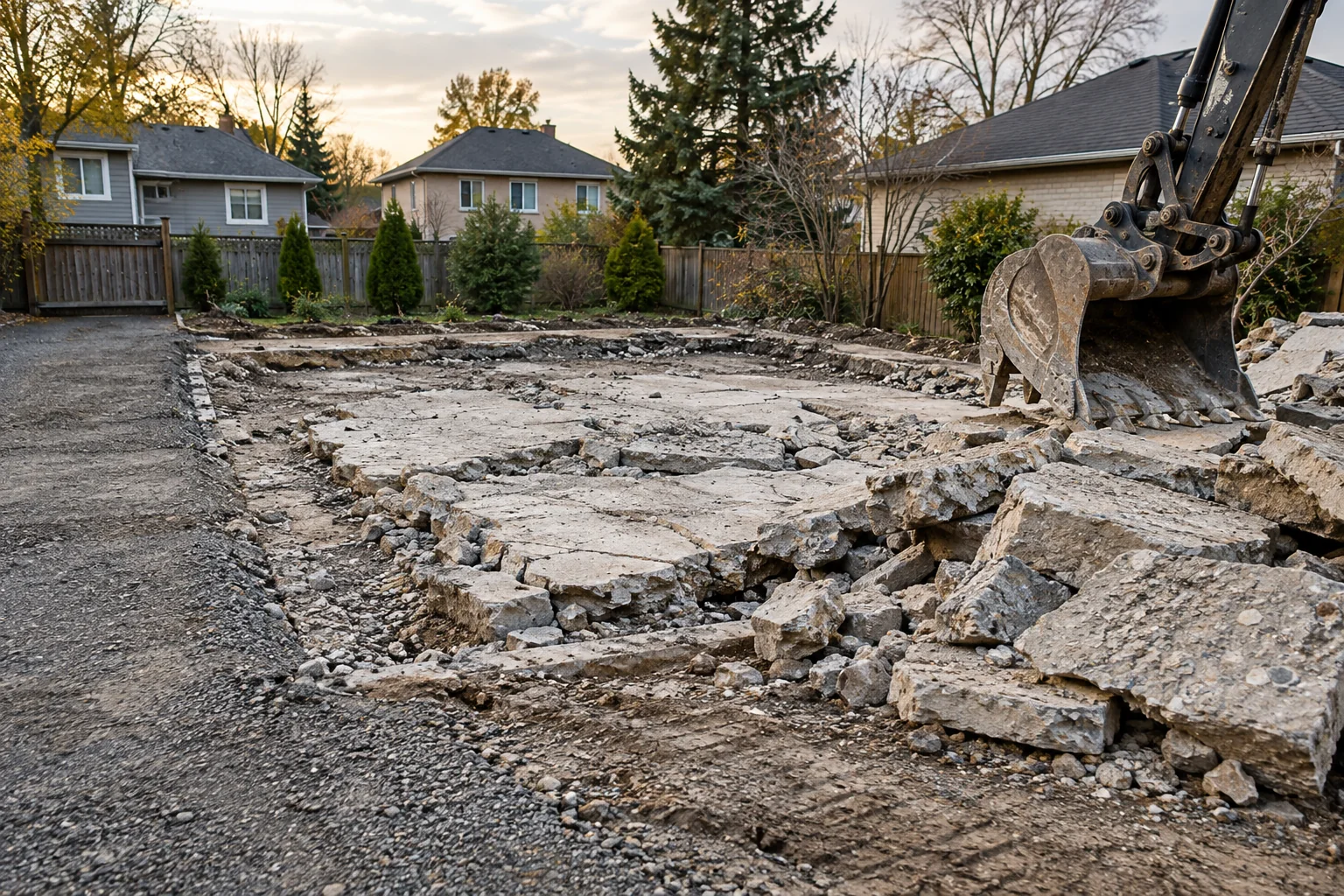
Define the concrete and the edges that stay
Mark the exact area being considered, including the boundary beside steps, foundation walls, garage floors and neighbouring paving. Ask the contractor to confirm where separation from retained surfaces is needed. A driveway slab, a foundation element and a retaining wall need different assessment; appearance alone does not establish how each piece functions.
Provide any available drawings or construction history. Tell the contractor about additions, previous repairs, heating systems or known buried routes, and leave unconfirmed thicknesses and reinforcement clearly marked as unknown.
Use measurements to clarify the allowance
Length, width and verified thickness help describe the existing volume. They do not automatically establish the loose volume after removal or the number of legal truckloads. Ask the hauler to confirm the relevant weight limits, accepted materials and loading arrangement before choosing a container.
A useful quote identifies what thickness and material condition have been allowed for, how inaccessible areas will be assessed and what happens if the slab differs from those assumptions. Include loading distance, separate handling of soil and any required protection of the route.
Resolve embedded services before disturbance
Ask the responsible contractor how embedded and buried services will be checked for this project, and how the assessment will inform the work. The work plan should also address dust, nearby occupants and retained structures.
Alberta example: OHS Code Part 30 requires embedded facilities to be isolated or their location marked as specified before existing concrete is disturbed or removed. Keep that professional assessment ahead of the removal schedule.
Plan the load and the ground left behind
Agree who confirms the receiving facility, its material criteria and any additional charges. Calgary identifies concrete among the construction materials that can trigger a surcharge when mixed into commercial garbage loads. Separation and an appropriate destination belong in the planning conversation.
After removal, specify whether the contract includes taking away underlying material, supplying replacement fill or restoring adjacent landscaping. The next installer should confirm the required base condition so demolition and replacement pricing share the same boundary.
Source: City of Calgary — Commercial landfill materials and rates
Reviewed October 9, 2026. Local references apply to their stated jurisdiction; confirm requirements for your property.