Demolition planning
Compare demolition quotes on the same basis
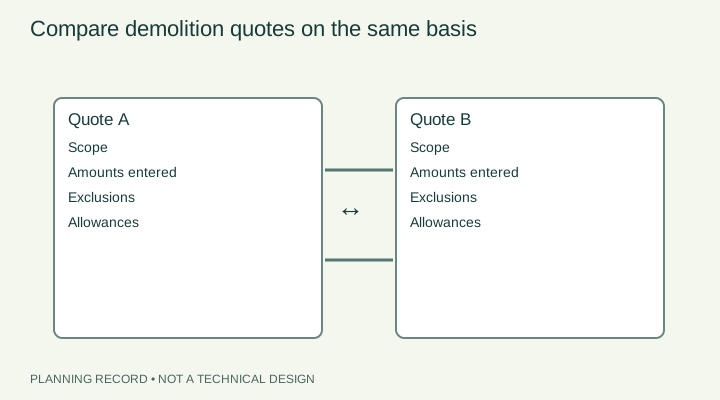
Make scope differences and entered allowances visible before comparing totals.
Give bidders a common dated record
Use the same area description, retained-item list and available assessment references for each quote request. Record the version and the date supplied. If an important assumption changes, send the updated record to the relevant bidders and keep earlier versions. This makes a price comparison easier to interpret because the offers can be linked to an actual scope rather than to slightly different conversations.
Reference context: Office of Consumer Affairs — Home renovations · Hiring a contractor — Government of Alberta
Write down what each amount includes
For each offer, identify assessment, approvals, utility coordination, removal, protection, salvage, disposal and final condition. Keep taxes, optional work and provisional items in separate entries. An allowance represents an entered assumption until the contract explains how it is used and reconciled. Ask the bidder to explain exclusions and the process for unforeseen conditions. The portal does not verify a contractor's credentials or whether a quoted method is appropriate.
Reference context: Hiring a contractor — Government of Alberta · Office of Consumer Affairs — Home renovations
Use arithmetic as arithmetic
The quote comparer sums only the base, additions and tax assumptions you enter. It retains the original entries and shows the formula, including any missing values that prevent a complete calculation. It supplies no market price, waste tonnage or recommended contingency percentage. Use the calculated total as a check on your own scenario; compare the associated scope notes and exclusions before drawing conclusions about value.
If a bidder supplies a unit amount, record the unit, the measured or assumed quantity and any minimum or exclusion they state. Ask whether the final amount follows an actual measured quantity or a fixed scope. The worksheet does not generate that contractual basis; it retains the explanation so the arithmetic can be interpreted.
Reference context: Office of Consumer Affairs — Home renovations
Resolve the contract before relying on a date
Ask for the written contract, payment milestones, responsibility for approvals and the change process. Check applicable consumer rules in the relevant province and confirm any licensing requirement that applies to the transaction. Do not treat a website badge, a low price or a verbal availability statement as proof. HAUSE intake can receive a planning enquiry, but an enquiry does not commit a contractor, confirm a schedule or approve a demolition operation.
Keep an additional column for each bidder's assumptions about quantities and site condition. If one offer excludes a hazardous-material review or assumes a receiving facility is available, flag that issue beside its amount. A comparison can then show both the numerical difference and the practical question that prevents a like-for-like conclusion.
Reference context: Hiring a contractor — Government of Alberta · Office of Consumer Affairs — Home renovations