Demolition planning
Separate salvage from demolition
Define retained items, ownership and removal responsibilities before valuable or reusable materials are mixed into a disposal scope.
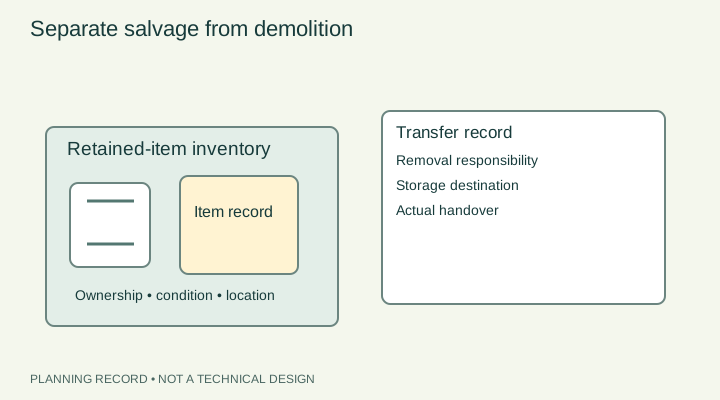
Make a dated retained-item list
Name the items you hope to retain or reuse and record their locations, dimensions if known and condition observations. A door, appliance or trim component can be described without promising that it is suitable for reuse. Distinguish items you own from items under a lease or another party's control. Have the responsible contractor assess how salvage fits the project and confirm which items can be retained without compromising the planned work.
Reference context: CCOHS — Demolition · Office of Consumer Affairs — Home renovations
Ask for separate responsibilities
A salvage list needs a party responsible for removal, protection, labelling, storage and transfer. If a contractor excludes those tasks, arrange them explicitly rather than assuming careful removal is part of a demolition allowance. Ask what happens if an item cannot be recovered in the expected condition. The contract should say whether the price includes the salvage attempt and who decides to change the plan; it should not promise a successful recovery that nobody has assessed.
Reference context: Hiring a contractor — Government of Alberta · Office of Consumer Affairs — Home renovations
Keep material restrictions visible
Reuse and recycling do not remove the need to establish material identity and applicable restrictions. Suspect coatings, insulation and contaminated materials belong in the assessment record, not automatically in a donation or resale category. Ask the receiving organization or facility what it accepts and what documentation it requires. This planning guide does not classify a material as hazardous, non-hazardous or suitable for reuse from its appearance.
When donation is proposed, ask the receiving organization about its acceptance conditions before treating the item as diverted from disposal. Record any collection or delivery responsibility. A hoped-for destination is a planning preference until the receiving party confirms it and the item's assessment permits the proposed handling.
Reference context: Alberta — Asbestos Abatement Manual · Health Canada — Lead-based paint · City of Calgary — Common business waste disposal
Reconcile the list at handover
Keep a final inventory showing what was retained, what was not recovered, where items went and which decisions changed. Photographs and receipt references can make that record easier to use, provided private information is handled appropriately. Compare the result with the agreed scope before closing the relevant contract item. The scope recorder can retain a salvage list and exception notes, so the next conversation begins with the actual record rather than a general expectation.
For a retained appliance, for example, the list can distinguish ownership, the party arranging the appropriate disconnection, the storage destination and the condition recorded at transfer. This provides a practical accountability trail without telling the homeowner to disconnect a service or assuming that the item remains suitable for use.
Reference context: Office of Consumer Affairs — Home renovations · City of Calgary — Common business waste disposal