Demolition planning
Make a demolition scope before requesting prices
A useful scope describes what may be removed, what must remain, the records available and the decisions still awaiting the appropriate people.
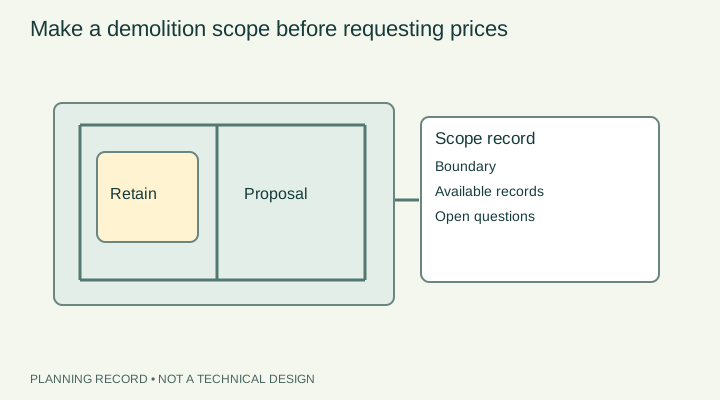
Describe the boundary in everyday terms
Begin with the address, the type of space and the purpose of the proposed removal. Whole-building removal, an interior strip-out and removal of a detached structure are different conversations. List each area separately and identify the items that must remain. A marked plan or annotated photograph can help explain the boundary, but it does not establish a load path, a safe sequence or material identity. Leave those decisions to the people responsible for assessment and the work plan.
Reference context: CCOHS — Demolition · City of Calgary — Demolitions
Separate observations from decisions
Record what you have actually seen: an addition, a buried service shown on a record, a shared wall or inaccessible finishes. Give each statement a date and a source. Use an unknowns list for concealed construction, hazardous materials, service status and permit conditions. Describing something as unknown is more useful than guessing that it is harmless. The scope can then identify who will investigate, what evidence they need and whether that work belongs in the requested estimate.
Reference context: CCOHS — Demolition · Alberta — Asbestos Abatement Manual
Ask for a written basis of comparison
A quote request should say whether assessment, approvals, utility coordination, temporary protection, salvage, disposal and final site condition are included. Ask the contractor to distinguish a fixed scope from provisional items and to identify what triggers a change. These questions help compare offers; they do not confirm that an offered method is suitable. Review exclusions alongside the price, and retain the dated version of the scope supplied to each bidder.
For a selective interior proposal, a useful item might state: remove the identified finish in this room, retain the adjacent finish, assess the concealed area and define who restores the interface. For a detached structure, the record may instead focus on services, retained landscaping and the proposed final site condition. These examples show how the questions differ without identifying which construction elements can be removed or specifying a work sequence.
Reference context: Hiring a contractor — Government of Alberta · Office of Consumer Affairs — Home renovations
Make an enquiry that can be edited
Use the scope recorder to keep your areas, retained items, available records and open questions together. Avoid putting account numbers, personal identity documents or private access codes into an enquiry. A HAUSE intake brief communicates the project for planning and follow-up; it is not a booking, an approval or a promise of a locally available contractor. Before sending a real request, check the wording and preserve a copy of the information you relied on.
Reference context: Office of Consumer Affairs — Home renovations