Demolition planning
Plan the hazardous-material records
Keep the material survey, its scope and any work restrictions visible before a demolition quote becomes a work instruction.
Do not identify materials from a photograph
Age, colour and a familiar product name cannot confirm what a coating, insulation or concealed material contains. A photo can identify the location you are asking about, while the material assessment establishes a separate record. Request the appropriate assessment before the proposed disturbance and document which areas could be inspected. A report with inaccessible areas needs those limitations carried into the scope; it does not turn the uninspected areas into cleared areas.
Reference context: Alberta — Asbestos Abatement Manual · Health Canada — Lead-based paint
Keep the report and the removal scope connected
Record the assessor, report date, areas reviewed and the affected materials exactly as stated. Keep any drawings or item identifiers with the scope so a contractor can find the same location. Ask who will resolve an inaccessible area and how a newly discovered material changes the work. The planning record should not select a removal class, protective equipment or an abatement procedure. Those choices depend on the material, work and applicable professional and regulatory responsibilities.
Reference context: Alberta — Asbestos Abatement Manual · CCOHS — Demolition
Ask who is responsible for each step
An assessment, a regulated removal operation and demolition are distinct tasks even when one contract coordinates them. Ask which party arranges the assessment, confirms applicable notifications and permits, performs specialized work and documents the handover. Alberta has occupational health and safety requirements that depend on the activity and employment context. Have the responsible party confirm the duties for this project instead of treating a general website statement as compliance evidence.
Keep a separate enquiry for any report terminology you do not understand. Ask the report issuer to explain the stated limitation rather than rewriting it as a clearance in your own summary. The contractor should receive the actual record, not only a homeowner's interpretation.
Reference context: Alberta — Asbestos Abatement Manual · City of Calgary — Demolitions
Preserve a usable handover
Keep the report, work restrictions, specialist completion records and receiving-facility documentation where they can be retrieved. Ask what evidence the next contractor requires before proceeding and identify any remaining exclusions. If an unexpected suspect material is encountered, the project needs a documented response from the responsible people rather than a portal-generated verdict. The scope recorder provides an unknown-material field so a quote discussion can retain the uncertainty without implying that the material has been tested.
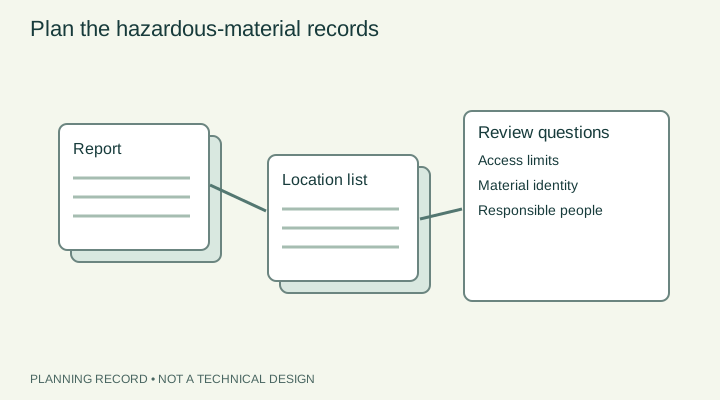
For example, keep a room identifier beside its report reference, the inspection access limit and the person handling the next enquiry. If the report covers one room but the removal proposal now includes another, flag the difference explicitly. This prevents a useful existing record from being applied to a location it did not assess.
Reference context: City of Calgary — Asbestos disposal · CCOHS — Demolition