Demolition planning
Document utility disconnection responsibilities
Keep provider confirmations and physical service records separate from assumptions about a building that appears vacant.
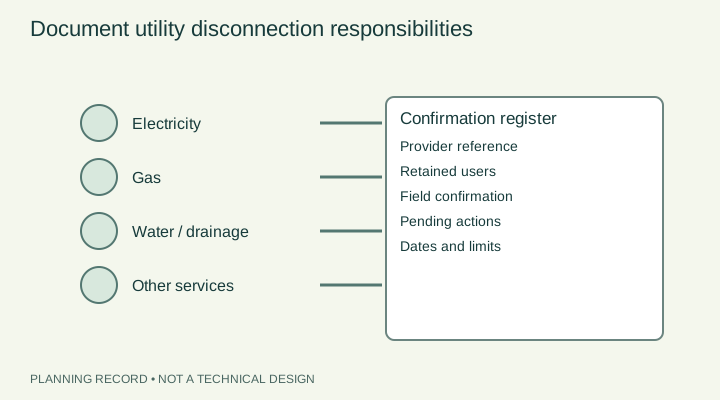
Inventory services without testing them yourself
List known electricity, gas, water, drainage, telecommunications and other connections, together with the records available. Include services that may pass through the property or serve a retained area. A vacant building, a switched-off appliance or a bill marked closed is not a disconnection certificate. The record should ask the utility provider and responsible qualified people what confirmation is required for the proposed work. This guide does not instruct a visitor to isolate, test or cut a service.
Reference context: CCOHS — Demolition · City of Calgary — Demolitions
Distinguish account status from field status
Keep the account enquiry, the provider work order and the field confirmation as separate entries. Record who issued each document and which service and location it covers. A demolition estimate may assume disconnections are complete; a homeowner may assume they are included. Writing both responsibilities down exposes that mismatch before it becomes a site problem. Ask who books the work, pays the fees and gives the confirmation to the demolition contractor.
Reference context: City of Calgary — Demolitions · Hiring a contractor — Government of Alberta
Identify retained and shared connections
A partial demolition or remodel can leave occupied rooms or adjacent users depending on existing services. Describe those needs and show the retained areas in the scope. Ask the responsible designers, trade contractors and providers how continuity and changes will be coordinated. Do not infer that a visible pipe or cable belongs only to the area being removed. Mark unknown routing as unknown until the relevant investigation and records resolve it.
If a service will remain for a retained room, label that requirement beside the removal boundary. The quote should then identify the separate coordination task rather than using a general disconnection phrase for the whole property. Ask the responsible party to confirm the actual arrangement.
Reference context: CCOHS — Demolition · City of Calgary — Homeowner trade permits
Use a clear readiness record
A useful handover records each required confirmation, its date, its issuer, any conditions and the person who reviews it before work. Keep pending tasks visible rather than using a single green status for the entire project. If conditions or scope change, ask whether earlier confirmations still apply. The scope recorder can preserve the references and open questions in an editable brief, but it does not release a site or replace a contractor's operation-specific checks.
A simple service register can use one row per connection: service, provider reference, retained users, responsible party and outstanding confirmation. Include the actual document date rather than only the planned appointment date. This makes a rescheduled or incomplete provider visit visible to the person preparing the demolition operation.
Reference context: CCOHS — Demolition · City of Calgary — Demolitions