Demolition planning
Compare full and selective removal scopes
Use a retained-area record to distinguish the questions raised by different removal proposals without choosing a structural method.
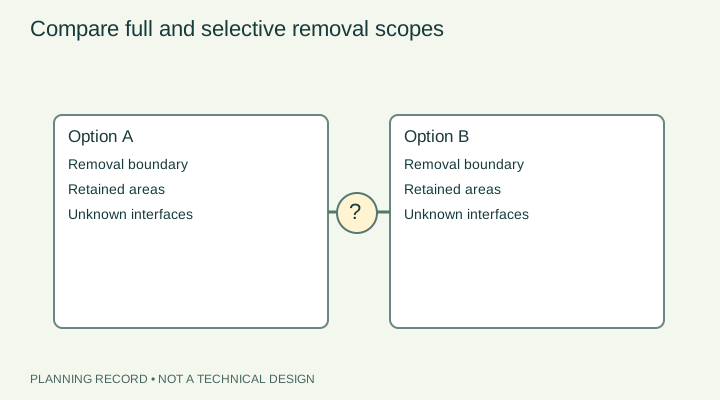
Define what remains for each option
A full removal proposal and a selective removal proposal need separate boundaries and assumptions. For each option, list the areas removed, the elements retained and the intended next use. Add drawings or record references that support the description. Do not decide that an element is non-structural because it looks thin, is an interior partition or appears in an old photograph. The responsible professional or contractor needs the appropriate assessment for the actual work.
Reference context: CCOHS — Demolition · City of Calgary — Home improvement projects
List interfaces with retained areas
Retained spaces may need service continuity, access, weather protection or later reinstatement. Record those needs as questions for the responsible people and identify who includes them in the quote. A removal allowance that covers only debris may exclude substantial coordination with the remaining property. Keeping the interfaces visible supports a useful comparison without making the portal a temporary-support or structural-design tool.
Reference context: CCOHS — Demolition · City of Calgary — Homeowner trade permits
Compare complete scope rather than one subtotal
Ask bidders to identify assessment, approval, protection, removal, disposal and reinstatement responsibilities for the same option. Keep optional work and unknown conditions separate. The quote comparer adds figures you enter and displays them alongside the exclusions; it does not declare the cheapest price the best choice. A lower subtotal may reflect a narrower scope, and a provisional allowance is not the same as an agreed fixed item.
A retained-finish question can be important even when it seems small. If new work meets an existing floor or wall, ask whether preparation and reinstatement belong to the removal contract or the next contractor's scope. Keep that interface beside the option so its omission does not disappear in a headline price comparison.
Reference context: Office of Consumer Affairs — Home renovations · Hiring a contractor — Government of Alberta
Record the chosen basis and unresolved decisions
If an option is selected for further planning, retain the dated scope, the assessment references and the decisions still needed. Do not turn a planning preference into permission to start work. Changes to the retained areas or future use may require a fresh review by the responsible parties. The scope recorder lets you preserve those details in a plain editable brief so a later quote discussion can refer to the same assumptions.
A comparison table can give each option its own retained-area list and unknowns column. Where an option depends on a professional decision, identify that dependency rather than entering a price as if the method were settled. This keeps a convenient comparison from becoming an accidental work instruction.
Reference context: City of Calgary — Building and development permits · CCOHS — Demolition