Demolition planning
Make a demolition close-out record
Collect the scope, approvals, receiving records and unresolved items in a practical handover file.
Start with the agreed final condition
Compare the completed work with the actual written scope and accepted changes. The agreed final condition may differ among whole-building removal, selective work and preparation for another project. Record observations and ask the responsible contractor to explain exceptions. This is a scope comparison, not an engineering inspection or a guarantee that a site is ready for a new use. Where an authority or professional review is required, retain its actual status.
Reference context: Hiring a contractor — Government of Alberta · City of Calgary — Demolitions
Collect the documents with their limits
Keep approvals, utility confirmations, relevant material-assessment and specialized-work records, disposal receipts and change authorizations together. Give each document a date and identify the area or activity it covers. A document with exclusions should keep those exclusions visible. Do not describe a partial report as an all-property clearance or assume a receiving receipt confirms every contractual disposal obligation.
Reference context: Alberta — Asbestos Abatement Manual · City of Calgary — Common business waste disposal · City of Calgary — Demolitions
List unfinished items and responsible parties
A clear close-out list names the item, the agreed action, the responsible party and the next confirmation needed. Distinguish a contractor's promise from a completed task and a submitted request from an issued approval. Ask how retained materials, temporary arrangements and outstanding charges will be resolved. The list can support a discussion about payment or handover, but the portal does not decide a legal dispute or the right to withhold funds.
Keep the next-stage questions in their own list. An outstanding authority inspection, an unconfirmed utility record and a planned replacement design require different follow-up. Name the actual recipient for each record rather than describing the next phase as ready. This makes the handover usable even when the following project's arrangements are not yet settled.
Reference context: Office of Consumer Affairs — Home renovations · Hiring a contractor — Government of Alberta
Make the next project use the actual record
If a remodel or replacement project follows, provide the relevant records rather than an informal statement that everything was removed. Identify remaining unknowns and any conditions imposed on the next stage. Store personal and account information appropriately and send only what the recipient needs. A HAUSE planning enquiry can summarize the handover questions; it does not certify the site, replace a professional record or promise the next contractor's availability.
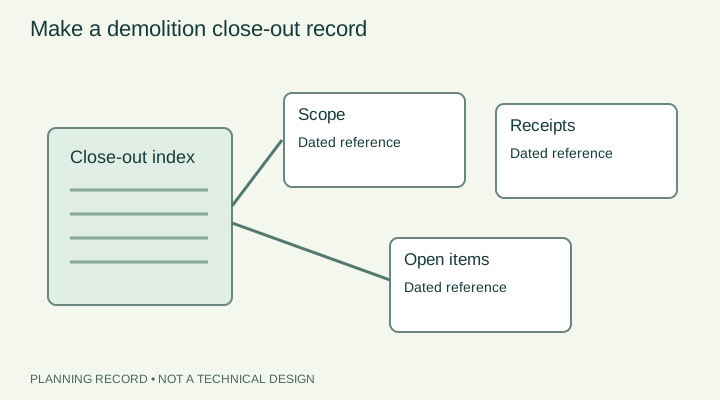
Create an index rather than relying on one long email thread: scope version, accepted changes, document references, receipt references and open items. The index helps a later reviewer find the underlying records and their limits. It does not replace those records or transform a contractor's completion statement into an independent assessment.
Reference context: CCOHS — Demolition · City of Calgary — Building and development permits